THE PROTEIN P53, THE GUARDIAN OF THE GENOME
The protein p53 is often referred to as the “guardian of the genome” because of its central role in protecting cells from cancer. It acts as a tumor suppressor, meaning it prevents cells from dividing uncontrollably and forming tumors. When DNA damage occurs, p53 can stop the cell cycle to allow for repair, activate DNA repair mechanisms, or, if the damage is beyond repair, trigger programmed cell death (apoptosis). 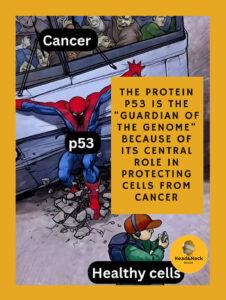
In this way, p53 serves as a safeguard to maintain the integrity of the genome and protect healthy cells.
In the context of cancer, mutations in the TP53 gene (the gene that encodes p53) are extremely common and found in more than half of all human cancers. When p53 loses its function due to these mutations, damaged cells can continue to divide unchecked, leading to tumor formation and cancer progression. This makes TP53 one of the most studied genes in cancer biology.
The meme captures this relationship well: p53 (represented as Spider-Man) is shown holding back the force of cancer (the bus) to protect the cells (the child). It symbolizes the protective role of p53 in preventing cancer from harming normal, healthy cells.
Source: future_biotecnology