Until now, patients with HPV-positive oropharyngeal carcinoma (OPC) have received a one-size-fits-all regimen of 70 Gray (Gy) of radiation therapy. Effective, but with severe long-term morbidity: risk of osteoradionecrosis requiring jaw resection, significant weight loss requiring feeding tube placement, and long-term dysphagia. 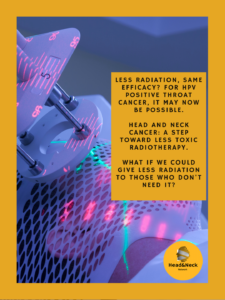
What if we could give less radiation to those who don’t need it?
On September 1st, 2026, the U.S. FDA granted Breakthrough Therapy Designation to JBS-003 (18F-fluoromisonidazole, 18F-FMISO), a first-in-class hypoxia PET tracer developed by Juniper Biosciences in collaboration with Memorial Sloan Kettering Cancer Center (MSK).
JBS-003 is a precision molecular imaging agent that identifies tumor hypoxia, a known biomarker of radioresistance. With a FMISO PET scan performed at week 2 of treatment, clinicians can risk-stratify patients:
• Hypoxic tumors -> continue with standard 70 Gy
• Non-hypoxic tumors (approximately 80% of HPV-positive OPC cases) -> may safely undergo de-escalated radiation therapy from 70 Gy to 30 Gy, a >50% dose reduction.
This is still an investigational approach, currently being evaluated in the ongoing randomized Phase 3. It is not yet FDA-approved, but
the direction is clear: from a one-size-fits-all approach to personalized, hypoxia-guided radiotherapy.
For further reading – original source: