Is your mouth talking to cancer? The link between oral microbiota and Head & Neck Cancer
Head and neck cancer is the 6th most common cancer worldwide, with over half a million new cases every year. We know tobacco, alcohol and HPV play a major role, but science is uncovering a new actor: your oral microbiome.
Your mouth is one of the most complex ecosystems in the body, home to 700 to thousands of species of bacteria, fungi and more.
When this ecosystem loses balance, a state called dysbiosis, it can contribute to cancer development.
How?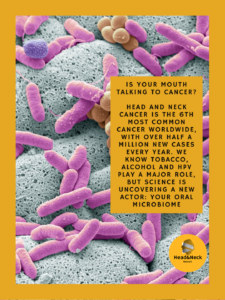
1. Chronic inflammation & immune escape
Certain bacteria release genotoxins, create oxidative stress and modulate both innate and acquired immunity, favoring a pro-tumor microenvironment.
2. The “bad actors”
Recent reviews consistently find higher abundance of Gram-negative species in patients with HNSCC, including Fusobacterium (especially F. nucleatum), Porphyromonas gingivalis, Prevotella, Parvimonas and Peptostreptococcus.
3. The protectors
Not all bacteria are enemies. Corynebacterium and Kingella appear to have a preventive effect, while Bacillus, Lactobacillus and Sphingomonas are associated with a more favorable prognosis.
Why does this matter?
Ninety percent of head and neck cancers are squamous cell carcinomas, and tobacco and alcohol can further modify the oral microbiota. Understanding these microbial signatures could lead to non-invasive biomarkers for early diagnosis, prognosis stratification, and even new therapeutic targets that improve response to radiotherapy, chemotherapy and immunotherapy.
This is still an evolving field. Dysbiosis alone does not cause cancer, but it interacts with known risk factors. Good oral hygiene, smoking cessation, limiting alcohol, and HPV vaccination remain key preventive tools.
Research is moving toward personalized medicine. Your microbiome might be part of it.